
FC FIRE RESOURCES
Fire Extinguisher Maintenance: Recharge or Replace?
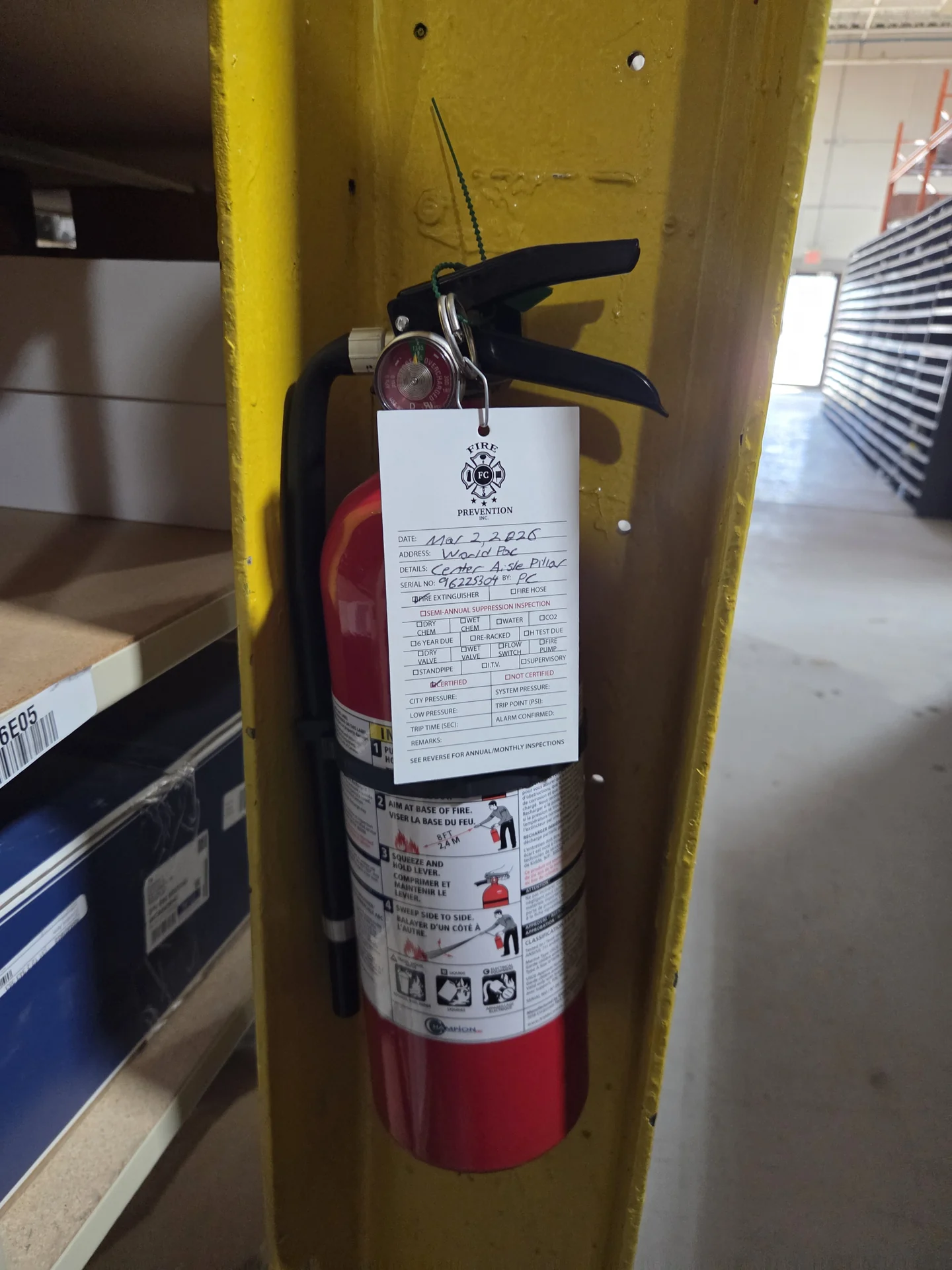
A fire extinguisher that has been used or has a service problem needs prompt attention. Whether it should be recharged or replaced depends on its design, condition, maintenance history and the work required. Buying a new unit is not automatically safer or cheaper than correctly servicing a suitable rechargeable extinguisher.
Start with the label and condition
Check whether the manufacturer identifies the extinguisher as rechargeable or nonrechargeable. These are different products. A rechargeable unit can be restored by a qualified service provider when it remains suitable for service. A nonrechargeable unit must be handled according to its replacement and disposal instructions after use. Amerex’s published hand-portable extinguisher owner’s manual explains this distinction.
Do not put a partly discharged extinguisher back on its bracket and assume it is ready. Report any use, loss of pressure, leakage, corrosion, damaged components or missing safety seals to the service provider. A gauge reading alone cannot confirm the condition of every internal component.
When servicing may be appropriate
For a serviceable rechargeable extinguisher, the provider should identify the correct agent, parts and procedures for that model. The assessment should also consider any maintenance or pressure testing that is due. Recharging, internal maintenance and hydrostatic testing are different tasks; they should not be described as if every recharge requires the same package of work.
The applicable interval depends on the type of extinguisher and the governing requirements. Ask the provider to explain the due work using the unit’s label, service record and applicable standard. Do not attempt to recharge or pressure-test a cylinder yourself.
When replacement may be appropriate
Replacement may be necessary when a unit is nonrechargeable, is condemned after examination or testing, lacks approved replacement parts, or is subject to a recall remedy requiring replacement. It may also be a reasonable commercial choice where the total service cost approaches the cost of a suitable new unit.
The replacement must suit the actual hazard. Match the required fire rating, agent and placement requirements rather than simply purchasing a similar-looking cylinder. Changing the size or location can affect the protection provided.
Compare the complete quotation
- Identify the unit’s model, rating and reason for service.
- Separate recharge, parts, testing, transport and installation costs.
- Confirm whether temporary replacement equipment is needed during service.
- Ask for the alternative replacement model and its rating.
- Confirm the records and service tags provided after completion.
This comparison is more useful than a universal claim about replacement savings. Keep the decision and service records with the building’s equipment inventory so future work can be planned accurately.
Keep required protection available
Arrange appropriate coverage while equipment is removed and ensure serviced or replacement extinguishers are returned to their designated locations. For household disposal in Toronto, consult the City’s household hazardous waste guidance; commercial operators should confirm the appropriate service arrangement.
FC Fire Prevention can assess the extinguisher and explain the available service options. Call 647-998-3473 for a quotation based on your equipment.