Home / Kitchen Suppression Systems
Commercial kitchen protection
Kitchen fire suppression inspection and service in Toronto
FC Fire Prevention provides commercial kitchen suppression inspection, maintenance and installation for restaurants and other food-service premises in Toronto and the GTA. Talk to us about an existing system, a new kitchen or changes to your cooking equipment.
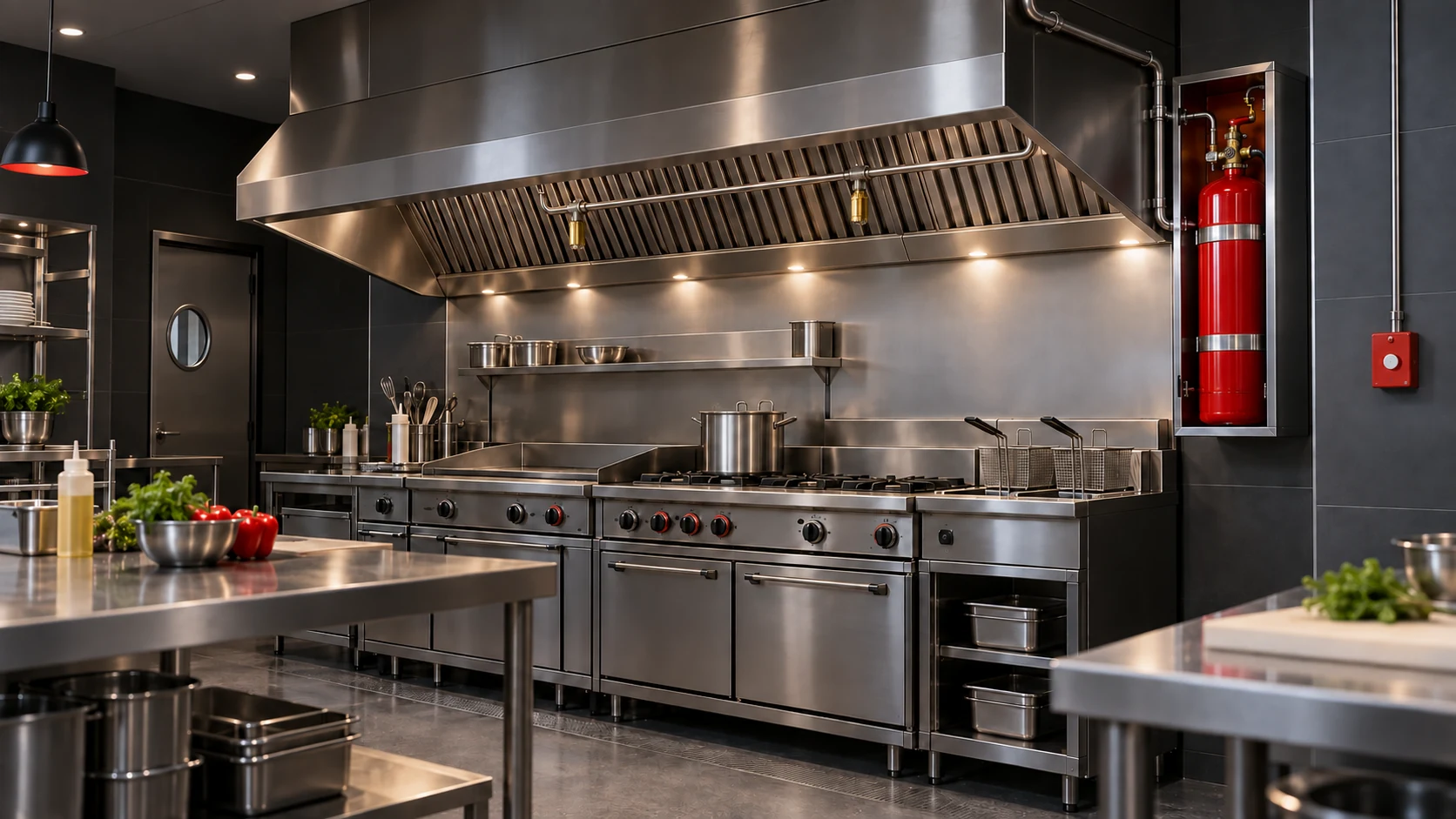
A system arranged around the cooking equipment.
Fixed kitchen suppression serves specified cooking and ventilation hazards. The equipment arrangement matters: nozzle selection and position depend on the system and the appliances it protects.
The hero image and component drawing are illustrative views, not an approved installation layout or photographs of the Toronto service described below.
| Component | Its role | Useful observation to report |
|---|---|---|
| Agent container and release assembly | Store the suppressant and operate its release. | Visible damage or a status concern. |
| Heat detection | Starts automatic actuation; fusible links are one detection method. | Damage or a concern identified in the service report. |
| Manual release | Provides manual system actuation. | Blocked access or visible damage. |
| Distribution piping and nozzles | Deliver agent to the specified protected areas. | A displaced nozzle, missing protective cap or changed appliance position. |
| Shutoff interfaces, where fitted | Connect system operation with the specified fuel or electrical shutdown. | A reported interlock fault or equipment change. |
Changes to the cooking line belong in the service record.
Report moved or replacement appliances before treating an existing suppression arrangement as suitable for the new layout. Provide appliance details and an overview of the proposed change.
- Identify the appliance and its position under the hood.
- Report missing nozzle caps, visible damage or an obstructed manual release.
- Leave nozzle adjustment, release testing and resetting to the responsible service provider.
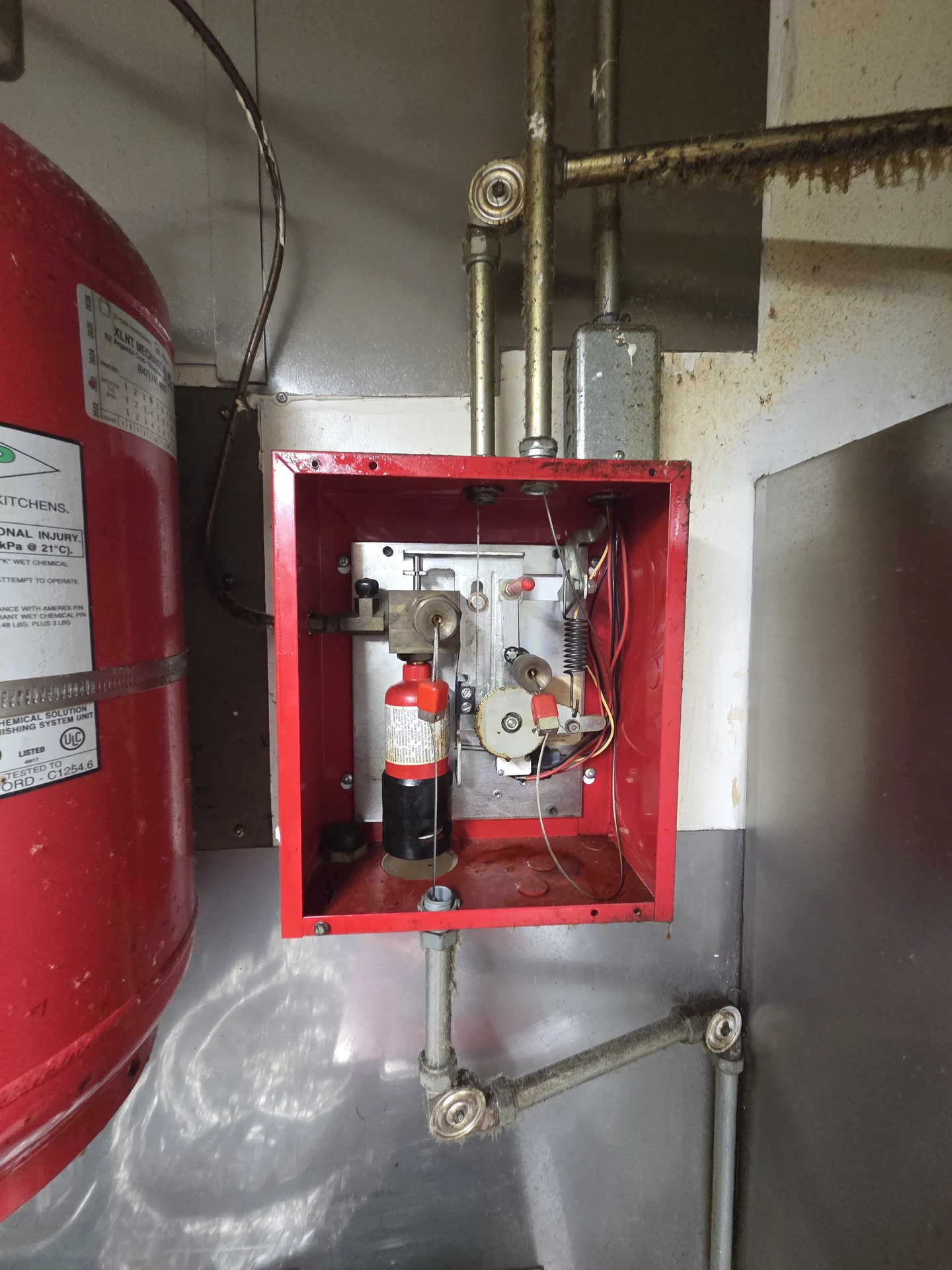
Plan the visit around your kitchen.
Tell us what work is needed and which equipment is involved. Share the available system report so the proposed inspection, maintenance or corrective work can be discussed before the visit. Include your operating hours and when the equipment can be accessed so arrangements can be discussed with your kitchen team.
- Property address and on-site contact.
- Suppression system details and recent service records, if available.
- Cooking equipment makes, models and positions, where known.
- Access restrictions and any reported deficiencies.
Changing the cooking line?
Describe any proposed equipment replacement, repositioning or kitchen-layout change. Include available drawings and the latest system report, then agree who is responsible for the assessment, installation work and follow-up documentation.
Installation planning
Discuss the proposed equipment and layout before work begins.
Explore Installation planning ↗Reported deficiencies
Share the findings and discuss the corrective work to be included.
Explore Reported deficiencies ↗Portable extinguishers
Include your kitchen's portable extinguisher equipment in the service conversation.
Explore Portable extinguishers ↗A completed Toronto kitchen service.
In July 2026, FC Fire completed a kitchen fire-suppression inspection and corrective work for a Toronto hospitality venue. The visit included inspection and testing of the system's manual activation and fuel-shutoff functions.
The service report records replacement of six fusible links and three missing nozzle caps. After the work and testing, the technician recorded that the system had returned to normal operation at the time of the visit.
The completed inspection report was sent to the venue's team the following day, documenting the work performed and the recorded system condition.
Keep the service scope and records clear.
Confirm the inspection and maintenance tasks for the installed system, the access arrangements and the documentation included. Ask how findings will be reported and how any additional work will be approved.
Plan an inspection visit
Use the system information and available reports to discuss the visit.
Explore Plan an inspection visit ↗What to request after corrective work
When a service report identifies a problem, keep the original finding with the later repair records. This gives the next person reviewing the kitchen a clear account of what needed attention, what was done and what remains to be arranged.
Connect the work to the finding
Ask the service provider to identify the report item and component covered by the correction. If several items were listed, request a separate status for each. A replacement date helps record the work; the follow-up record should also describe the checks performed afterward and their results.
- Equipment: Which component was serviced or replaced, and what identification is recorded?
- Testing: Which functions were checked, what were the results, and were any checks left incomplete?
- Connected equipment: How was any affected fuel shutoff, ventilation or building-alarm connection addressed?
- Outstanding work: Which items remain open, who is responsible and what is the next step?
Keep the different service dates clear
Ask for the next routine service date separately from the corrective-work date. Where a component has its own maintenance requirement, have the responsible provider explain which date applies and the equipment instructions used to establish it.
Read the scope of any completion statement alongside the report. Confirm whether separate exhaust cleaning, portable-extinguisher service or project documentation is still outstanding. Our restaurant suppression planning guide helps you prepare the wider service discussion.
Common questions.
What should I send when requesting kitchen service?
Send the property address, system details if known, available inspection records and a description of the work. Identify your on-site contact and any access restrictions.
Should I mention a change to cooking equipment?
Yes. Include the equipment makes and models if known, the proposed positions and any changes to the kitchen layout so the work can be assessed and scoped.
How do I raise an urgent system concern?
Call 647-998-3473 (FIRE) to discuss the issue and current availability. For a fire or immediate danger, call 911 and follow your building's emergency procedures.
Plan your kitchen suppression service.
Share the property location, installed equipment and any recent report. Include proposed kitchen changes in the same enquiry.
Request kitchen service ↗We’ll discuss the scope and available appointments.