Home / Special Hazard
Equipment, spaces and processes
Special-hazard system enquiries.
Special-hazard systems serve particular equipment, spaces or processes. Share the protected area and installed system details so the proposed service, responsible personnel and manufacturer-specific requirements can be discussed.
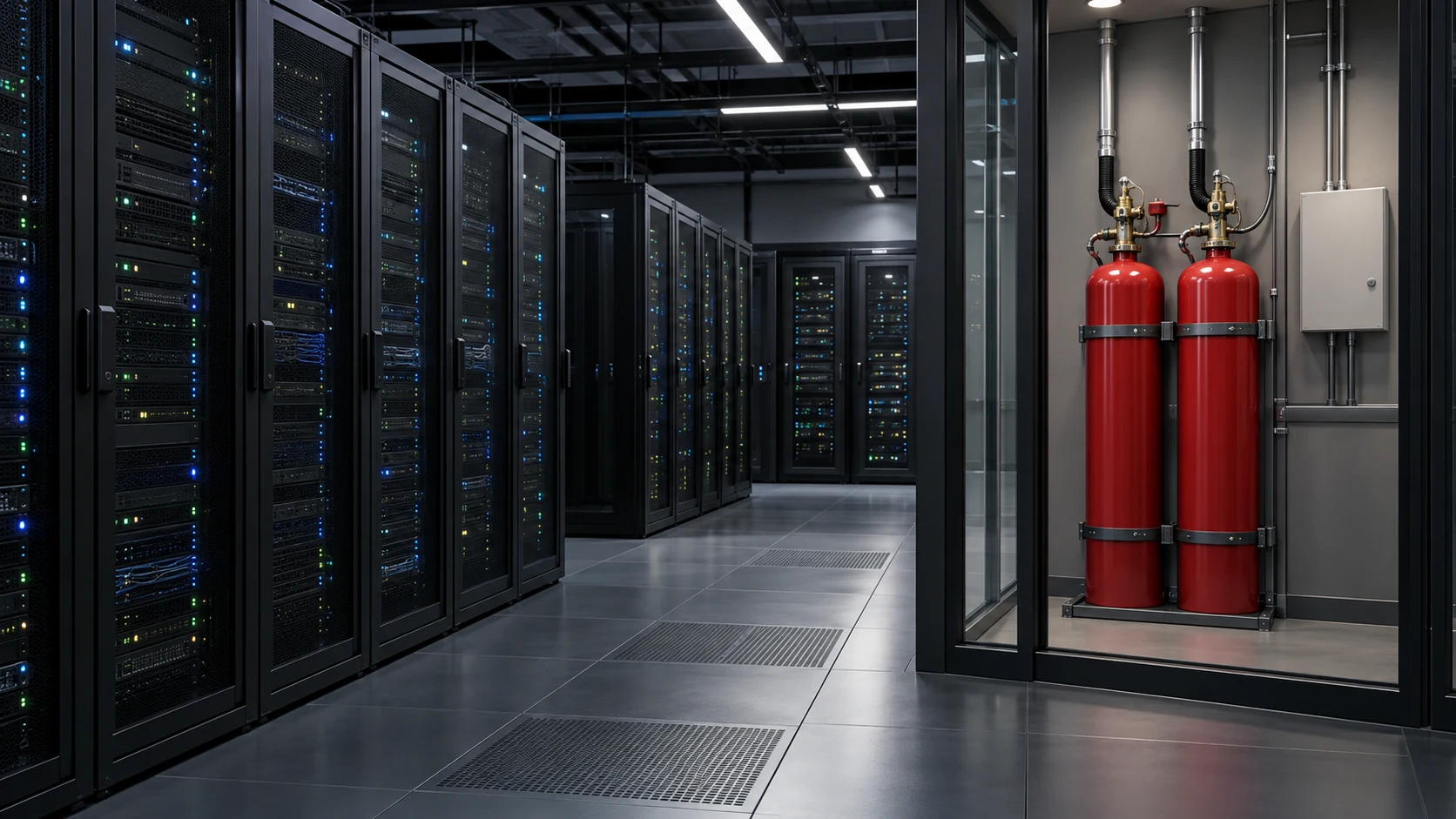
Understand the installed arrangement.
A cylinder-based clean-agent system is one example of special-hazard protection. Other agents and applications use different equipment and operating sequences.
The image is a generic illustration. It does not identify a suitable agent, demonstrate coverage or represent an FC Fire installation.
| Component | Its role | Useful observation to report |
|---|---|---|
| Detection | Sends an input when the specified fire condition is detected. | A device fault message or change in the protected area. |
| Releasing control equipment | Processes inputs and controls the configured suppression sequence. | The exact displayed condition and time noticed. |
| Warnings and manual controls, where fitted | Provide occupant information and the system's specified manual functions. | Blocked access, damage or a reported warning-device fault. |
| Agent containers and valves | Store and release the identified extinguishing agent. | Visible damage or a concern in the service record. |
| Distribution piping and nozzles | Carry and discharge agent into the designed protected area. | Damage, obstruction or changes around discharge points. |
Keep the report specific to the protected space.
Use the exact room and system identity in the enquiry. Leave release controls, cylinders and settings untouched while the concern is assessed through the site's authorized process.
- Include the panel message or report item, rather than guessing the cause.
- Describe proposed changes to room layout, equipment, doors or ventilation.
- Ask which manufacturer documents and system records are needed to assess the change.
Start with the space and the system.
Describe the room's use, the equipment or process involved and the reason for your enquiry. Existing drawings and service records help define the work being considered.
- Property and protected-area details.
- System manufacturer, model and extinguishing agent, if known.
- Available drawings and recent inspection or service reports.
- Reported issues or changes to the space, process or equipment.
Use the installed equipment records.
For an enquiry involving a clean-agent, dry-chemical, carbon dioxide or foam system, start with the installed equipment records. Identify the actual system so the appropriate service scope can be discussed.
- For clean-agent equipment, include the agent name, manufacturer and model if known.
- For dry-chemical equipment, share the equipment information and proposed service.
- For carbon dioxide systems, identify the protected area and site-access arrangements.
- For foam systems, include the area served, system records and proposed changes.
Agree on responsibilities before work begins.
Confirm who will assess the system, which qualifications or authorizations apply to the proposed work, and which manufacturer information will be used. Ask what records are included and how additional work will be agreed.
Discuss inspection and maintenance requirements for the identified system with the responsible service provider. Keep the service scope connected to the actual equipment and protected area.
Inspection scope
Discuss the equipment and functions involved in the proposed visit.
Explore Inspection scope ↗Service documentation
Confirm the reports, findings and follow-up records included in the work.
Explore Service documentation ↗Project planning
Identify the people, documents and project responsibilities before changes proceed.
Explore Project planning ↗Make a change request clear before work is scoped
For a planned change, prepare a short comparison of the protected space as it is recorded today and the arrangement you want to create. This gives the responsible provider a clear question to assess alongside the installed system documents.
Describe the change and the unknowns
Separate confirmed information from details that still need checking. Useful items include the room's intended use, changes to equipment or processes, altered partitions or openings, and proposed ventilation changes. Identify which drawing revision shows the current arrangement and which shows the proposal.
If a record is missing, say what is missing and who may hold it. Ask how the system identity and existing conditions will be confirmed before a service or modification scope is agreed.
Read the proposal against the requested work
- Which protected area and installed system does the proposal cover?
- Who will assess the proposed change using the relevant manufacturer information?
- Which equipment work and connected building functions are included?
- Which specialist attendance, testing or documents are separate responsibilities?
- What will be supplied at handover, and how will remaining items be recorded?
Have the responsible provider explain the service scope for the identified equipment and confirm the qualifications or manufacturer authorizations needed for that work. Agree how additional findings will be raised before extending the work.
At completion, retain the agreed records and drawing revisions with the system history. Use project-planning guidance to organize professional responsibilities and service-records guidance to discuss the handover.
Common questions.
What if I do not know the agent or system model?
Share the information you have from existing reports or equipment records and identify the protected room or process. Mention which details are unknown so they can be addressed when scoping the enquiry.
What does waterless fire suppression mean?
Waterless describes suppression approaches that do not use water as the extinguishing agent; it does not identify a single interchangeable system. For example, Fike describes waterless chemical-agent systems. When requesting service, use the actual agent name, manufacturer, model and protected area from the equipment records. Those details help define the proposed work and the relevant manufacturer information.
What information helps with a server-room suppression enquiry?
Include the installed suppression and detection equipment, room layout, any raised floor, recent service reports and proposed changes to equipment or ventilation. Server-room protection can involve different approaches; Fike’s data-centre application overview describes chemical-agent, inert-gas and water-mist options. Ask the responsible project team to assess the actual space and system rather than choosing an agent from a generic description.
What if the protected space is changing?
Describe the planned change and provide available drawings, equipment information and recent reports. Confirm the assessment and project responsibilities before agreeing on work.
Is every special-hazard system serviced to the same schedule?
The service discussion should identify the installed equipment and applicable manufacturer information. Ask the responsible service provider to confirm the inspection and maintenance scope for that particular system.
Describe your special-hazard system.
Start with the protected area, installed equipment and proposed work. Include the records you have available.
Discuss your system ↗We’ll discuss the scope and available appointments.