
FC FIRE RESOURCES
Kitchen Fire Prevention: Safer Cooking at Home
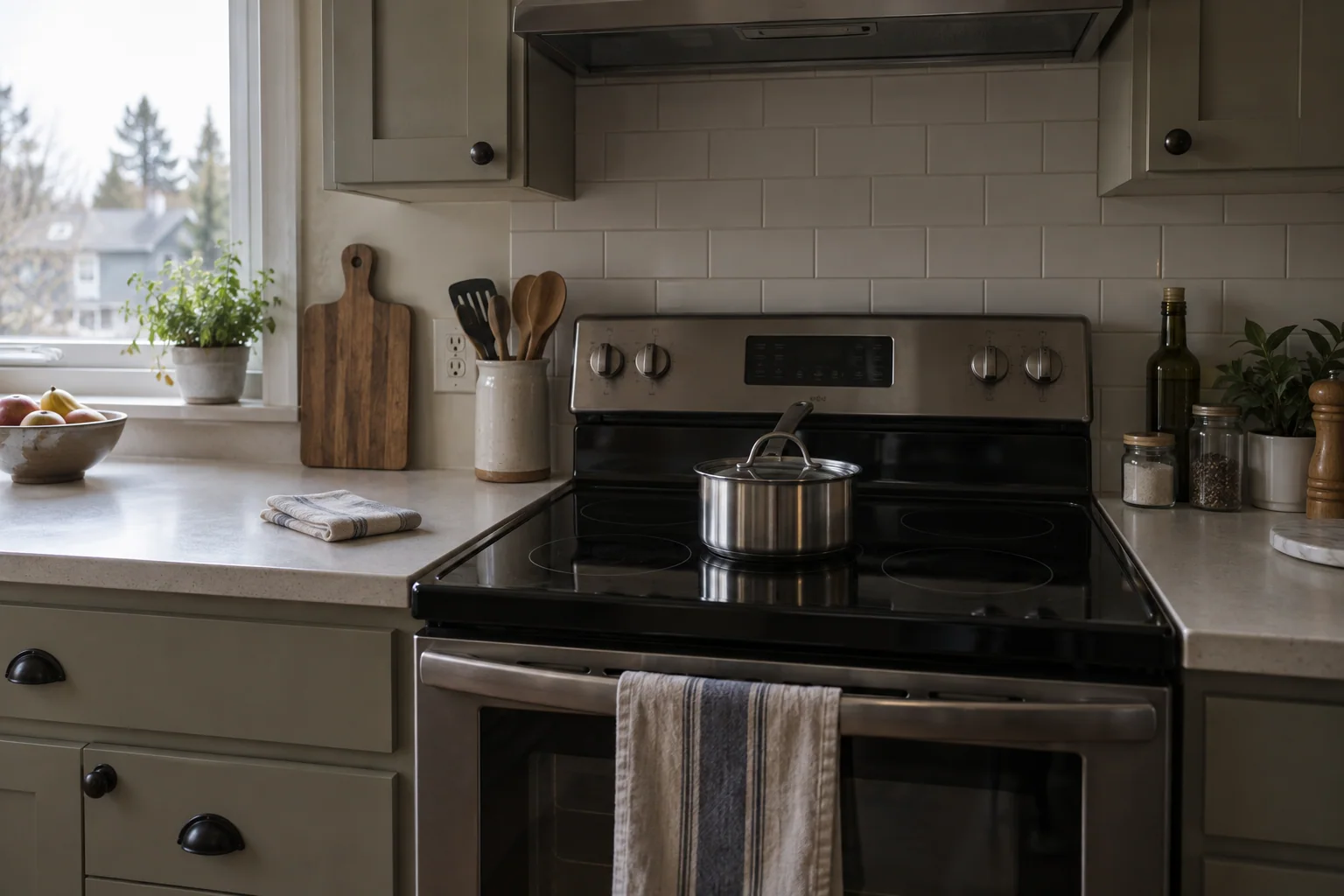
Cooking safely begins with attention. Before switching on the stove, make sure you can stay nearby, the cooking area is clear and everyone in the household knows what to do if something goes wrong. No kitchen is fireproof, but a few consistent habits can reduce common risks.
Set up before cooking
Move packaging, towels, oven mitts and other combustible items away from the stovetop. Choose a suitable pan and keep a lid that fits within reach. Keep children and pets away from hot cooking equipment, and position pan handles to reduce the chance of someone knocking a pan or reaching for it.
Do not begin cooking if you are too tired or impaired to stay alert. Plan for interruptions: if the doorbell, a call or another task needs your attention, turn off the heat before leaving active stovetop cooking.
Stay with the heat
Remain in the kitchen while frying, boiling, grilling or broiling. For food cooking for longer periods, use a timer as a reminder and check regularly. Keep an eye on oil temperature and turn off the heat if the oil starts smoking.
Inspect small appliances and cords for obvious damage. Stop using damaged equipment and follow the manufacturer’s repair or replacement advice. Do not route cords where they can contact a hot surface or be pulled by a child.
Know the response to a small cooking fire
Toronto Fire Services advises keeping a lid or baking sheet nearby. If a small grease fire starts in a pan and it is safe to act, slide the lid or sheet over it and turn off the burner. Leave it covered until cool. Do not move a burning pan and never add water to a grease fire. For an oven fire, switch off the heat and keep the door closed.
If you have any doubt, or the fire grows or spreads, get everyone outside and call 9-1-1 from safety. These actions are drawn from Toronto Fire Services’ cooking safety guidance.
Keep alarms and escape routes ready
Check that the home’s smoke alarms work and follow the manufacturer’s maintenance instructions. Repeated nuisance alarms need a proper solution; disconnecting an alarm removes an important warning. Make sure the household can identify the alarm sound and knows the outside meeting place.
Keep routes to exits clear. Include children, visitors and anyone who may need assistance when practising the home escape plan. Do not rely on someone being awake to discover a fire.
Use this short household check
- Is the stovetop clear before cooking starts?
- Is an adult able to stay attentive to the cooking?
- Is a suitable lid nearby?
- Does everyone know never to put water on a grease fire?
- Are alarms working and escape routes clear?
This guide concerns home cooking. Commercial kitchens need a separate assessment of cooking equipment, hood and duct cleaning, fixed suppression and portable extinguisher requirements. FC Fire Prevention can discuss those service needs at 647-998-3473.