Toronto skyline at dusk with CN Tower silhouette, overlay text reading "Canada Fire Protection Recalls 2005–2025 – Models, hazards & official links", with fire safety icons and FC Fire Prevention logo.


Canada 2005–2025: Fire Protection Product Recalls You Should Know

What’s happening: This is a practical, Canada‑focused roundup of major fire protection product recalls from the last 20 years—smoke/CO alarms, fire extinguishers, commercial fire alarm components, and sprinklers. Each item lists the make + model, a short why, and the official link to verify.

Use it to audit your sites across Toronto & Ontario and schedule replacements before inspections trigger deficiencies.

Canada fire protection product recalls
Smoke/CO alarms • Extinguishers • Panels • Sprinklers
Toronto & Ontario
For property managers, building owners, condo boards, facility directors

Recalls: Smoke & CO alarms (residential & small buildings)

Kidde Dual‑Sensor Smoke Alarms — PI2010CA, PI9010CA
Health Canada • 2018‑03‑21
Why: A yellow cap may block the photoelectric sensor, causing failure to detect smoke.

Models: PI2010CA (AC/hardwired), PI9010CA (DC/battery). Mfg dates: Sept 10, 2016–Oct 13, 2017.

Official recall — Government of Canada

Do: Inspect for the yellow cap; replace per recall.
KiddeSmoke alarmCanada

Kidde “NightHawk” Talking Combo Smoke/CO Alarms — KN‑COSM‑IBCA, KN‑COSM‑ICA
Joint recall • 2016‑11‑10
Why: “End‑of‑life” chirp may not sound if the 9V battery is replaced, giving a false sense of protection.

Models: KN‑COSM‑IBCA (with 9V backup), KN‑COSM‑ICA (no backup). Mfg: Jun 1, 2004–Mar 2011.

CPSC recall (in conjunction with Health Canada)
UL (Canada) summary

Do: Check date codes; replace affected units.
KiddeCombo alarmCanada/US program

Kidde “TruSense” Smoke & Combo Alarms — 2040/2050/2060/2070 series
Manufacturer recall • 2021‑05‑06
Why: May fail to alert to a fire under certain conditions.

Models: 2040‑DSR, 2050‑DS10, 2060‑ASR, 2070‑VDSR/VASR/VDSCR/VASCR. Marked with “TRUSENSE” and/or “AMBER = FAULT” on the face.

Kidde recall notice & replacement portal

Do: Identify affected units and request replacements. Keep using existing alarms until replacements are installed.
KiddeSmoke/CO

Bosch “Radion” Wireless Smoke Alarm — RFSM‑A
Health Canada • 2015‑10‑30
Why: Reported failure to alert; replacement required.

Model: RFSM‑A (wireless, round); label shows “F01U263962”.

Official recall — Government of Canada

Do: Verify via label; replace through dealer/manufacturer.
BoschWireless smoke alarmCanada

Uncertified “Combination Smoke & CO Detector for Home” (Walmart.ca listing)
Health Canada • 2020‑02‑19
Why: No Canadian certification (CSA/cUL/ULC). May fail to operate.

Listing: Third‑party seller on Walmart.ca (SKU 6HMGL4RAX630), no model/date/cert marks.

Official recall — Government of Canada

Do: Replace with alarms bearing CSA/cUL/ULC marks on the product.
Consumer productCertification

Interlogix / ESL Hard‑Wired Smoke Detectors — 400 & 500 series
CPSC/Health Canada program • 2014‑08
Why: RF interference could cause failure to alert.

Models (examples): 400 series (e.g., 449C/449CT), 500 series (e.g., 541C/521B). Date codes 13084–14059.

UL (Canada) recall summary
CPSC notice

Do: Check model/date codes; replace affected heads.
Interlogix/ESLHard‑wired smoke

Heads‑up: Health Canada also reminds buyers to look for Canadian certification marks (CSA, cUL, ULC). Uncertified devices are a common deficiency.

Recalls: Fire extinguishers & vehicle suppression

Kidde Disposable Extinguishers (with black plastic Zytel® valves)
Health Canada • 2015‑02‑06
Why: Valve may fail to fully discharge when lever is pressed/released.

Brands/Models: Kidde & Garrison disposable ABC/BC units (31 models). Mfg dates: Jul 23, 2013–Oct 15, 2014.

Official recall — Government of Canada

Do: Verify date code; replace through Kidde.
Kidde/GarrisonPortable extinguisherCanada

Kidde Extinguishers — plastic handle & push‑button styles (many models)
Joint recall • 2017‑11‑02
Why: Can become clogged / require excessive force; nozzle may detach.

Scope: 134 plastic‑handle models (1973–2017) and 8 push‑button “Pindicator” models (1995–2017).

Recall notice (with Canada coordination)
Kidde ID Guide

Do: Use the ID guide to check model/date code; replace affected units.
KiddePortable extinguisher

Kidde KDS‑25 (vehicle fire suppression — electric actuator)
Transport Canada • 2019
Why: Electric actuator fault may prevent discharge when activated.

Where seen: Heavy vehicles/buses with integrated suppression (e.g., certain Volvo/Prevost vehicles).

Transport Canada — Volvo trucks

Do: Fleet managers: check VIN campaigns; service per OEM/Kidde bulletin.
KiddeVehicle suppressionCanada

KitchenWorx™ by FireRein “Fire Protection Spray” (aerosol)
Health Canada • 2020‑12‑23
Why: Defect can prevent contents from spraying as intended.

Official recall — Government of Canada

Do: Return for refund; do not rely on as a fire‑fighting device.
Consumer aerosolCanada

Recalls & safety notices: Commercial fire alarm systems

Honeywell (Gamewell‑FCI & Notifier) photoelectric sensors — “‑IV” series
CPSC recall • 2019‑06‑21
Why: Under certain conditions (e.g., fast‑flaming fires), affected sensors could fail to alert.

Models: Notifier FSP‑951‑IV/FSP‑951R‑IV/FSP‑951T‑IV; Gamewell‑FCI ASD‑PL3‑IV/variants; specific date codes/CLIP mode.

Recall details & model matrix

Do: Check device part numbers/date codes in your as‑builts; replace/upgrade firmware per bulletin.
Commercial detectionNotifier/Gamewell‑FCI

Simplex® 4100ES Fire Alarm Control Panels
CPSC recall • 2014‑11‑25
Why: Defective component could fail to activate the system during an event.

Recall notice & affected ranges

Do: Confirm panel revision; apply manufacturer’s corrective action.
SimplexFACU

Simplex® 4100U‑NXP (specific software rev.) — monitoring signal issue
CPSC recall • 2011‑02‑08
Why: Could fail to send trouble/alarm signals to monitoring centre.

Recall notice

Do: Verify software version; upgrade as directed.
SimplexFACU

System Sensor — low‑frequency horns/strobes (select date codes)
Manufacturer recall • 2024
Why: Limited devices with date codes 3034/3035 affected; immediate action required.

Models: HWL‑LF, HRL‑LF, HGWL‑LF (and select kits), plus P2WL‑LF — see bulletin SSR24.1.

Recall page & SSR24.1 bulletin

Do: Cross‑check part numbers/date codes; coordinate replacement with your service provider.
NotificationLow‑frequency

Kidde — integrated strobe products (UL 1971 compliance notice)
Product safety notice • 2022‑05‑12
Why: Certain strobes (e.g., P4010ACLEDS‑2, P4010ACLEDSCO‑2, SLED177i) produced after Oct 22, 2021 meet UL 1638 only (not UL 1971).

Kidde Product Safety Notices

Do: AHJ/consultant should verify code/ULC listing requirements for visual notification (accessibility) before deployment.
NotificationStandards

Legacy sprinkler replacement programs (often still found on sites)

Central / GEM / Star O‑ring sprinklers (wet & dry) — Massive replacement program announced in 2001 and ended Aug 31, 2007. These heads have known O‑ring degradation issues. If still present, treat as out‑of‑service and replace.

Program update (deadline & identification)

What to do (checklist)

  • Inventory devices: Export an up‑to‑date device list (alarms, detectors, panels, modules, notification, extinguishers, sprinklers).
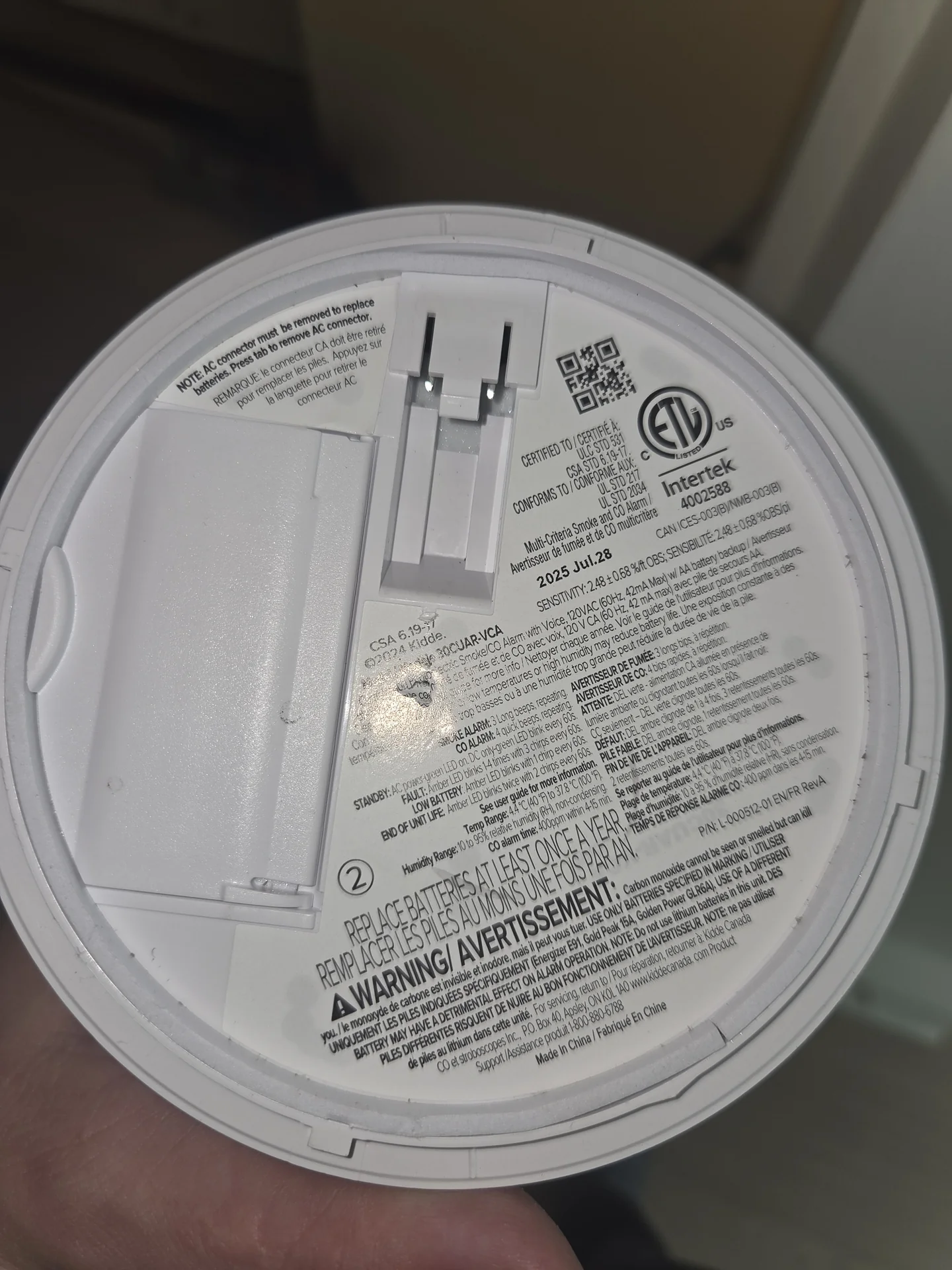
  • Match models & date codes: Compare against the official notices/recalls above. Photograph labels for records.
  • Prioritize replacements: Focus on any recall affecting primary detection/notification paths or extinguishers.
  • Document the fix: Keep proof of replacement, updated as‑builts/device lists, and update your Fire Safety Plan.
  • Communicate with occupants: For residential/tenanted areas, post notices when alarms are being replaced.
  • Schedule annual testing: Use testing to catch legacy/problem devices early. See Fire Inspections & Testing.

Scheduling & budgets

Typical effort: Small residential retrofits (alarms/extinguishers) can be same‑day. Commercial detector/notification swaps scale by device count, ceiling height, access, and after‑hours needs. Panels/sprinklers require engineering sign‑off and coordination with monitoring & sprinkler contractors.

Ballpark ranges (varies by site): $ per device for alarms/extinguishers; $ per head for sprinkler changes; project pricing for panels and large detector groups.

Documentation to keep on‑site

  • Recall log (device, location, model, serial/date code, action taken, date, technician).
  • Manufacturer bulletins/recall letters for your models.
  • Replacement records (invoices, RMA confirmations, photos).
  • Updated as‑builts & device lists in the fire alarm cabinet and Fire Safety Plan.
  • Acceptance/verification test reports after replacements (as applicable).

Compliance & penalties

Enforcement: In Ontario, life safety systems must be maintained in operating condition. Devices known to be defective or recalled can trigger orders, fines, or charges—and create insurance exposure. Common triggers: missed tests, unresolved deficiencies, uncertified devices, blocked/failed notification, expired extinguishers.

Good documentation shows due diligence if you’re audited or after an incident.

How FC Fire Prevention helps

  • Recall sweep & device audit: We cross‑check models/date codes against current notices and build a punch‑list.
  • Swap‑outs & verification testing: We source approved replacements, install, and document acceptance tests.
  • Panel/sprinkler engineering: For complex changes, our team coordinates design, permits, and sign‑offs.

FAQs

Q1. Is this list exhaustive for Canada?

A1. No—this highlights widely used devices with credible Canadian or manufacturer notices. Always search the Government of Canada Recalls & Safety Alerts for your exact model numbers.

Q2. Do U.S. recalls apply to my Ontario building?

A2. Many commercial systems are North American. If a manufacturer/certifier issues a recall or safety notice (often “in conjunction with Health Canada”), treat it as actionable. Confer with your AHJ and your service provider.

Q3. How do I verify Kidde extinguisher inclusion?

A3. Use Kidde’s Recall ID Guide with model/date code photos, then request replacement if affected.

Q4. We found old O‑ring sprinklers. What now?

A4. The program ended in 2007, but heads may remain in legacy buildings. Treat as out‑of‑service and plan a change‑out with a sprinkler contractor. Keep documentation.

Q5. Can FC Fire manage replacements and re‑testing?

A5. Yes. We procure listed replacements, coordinate trades, and complete acceptance tests with documentation for your records.

Canada fire protection product recalls
Toronto & Ontario
Recalls: smoke/CO • extinguishers • panels • sprinklers


Categories:

Comments are closed