
FC FIRE RESOURCES
EV Charging and Fire Safety in Ontario Parking Garages
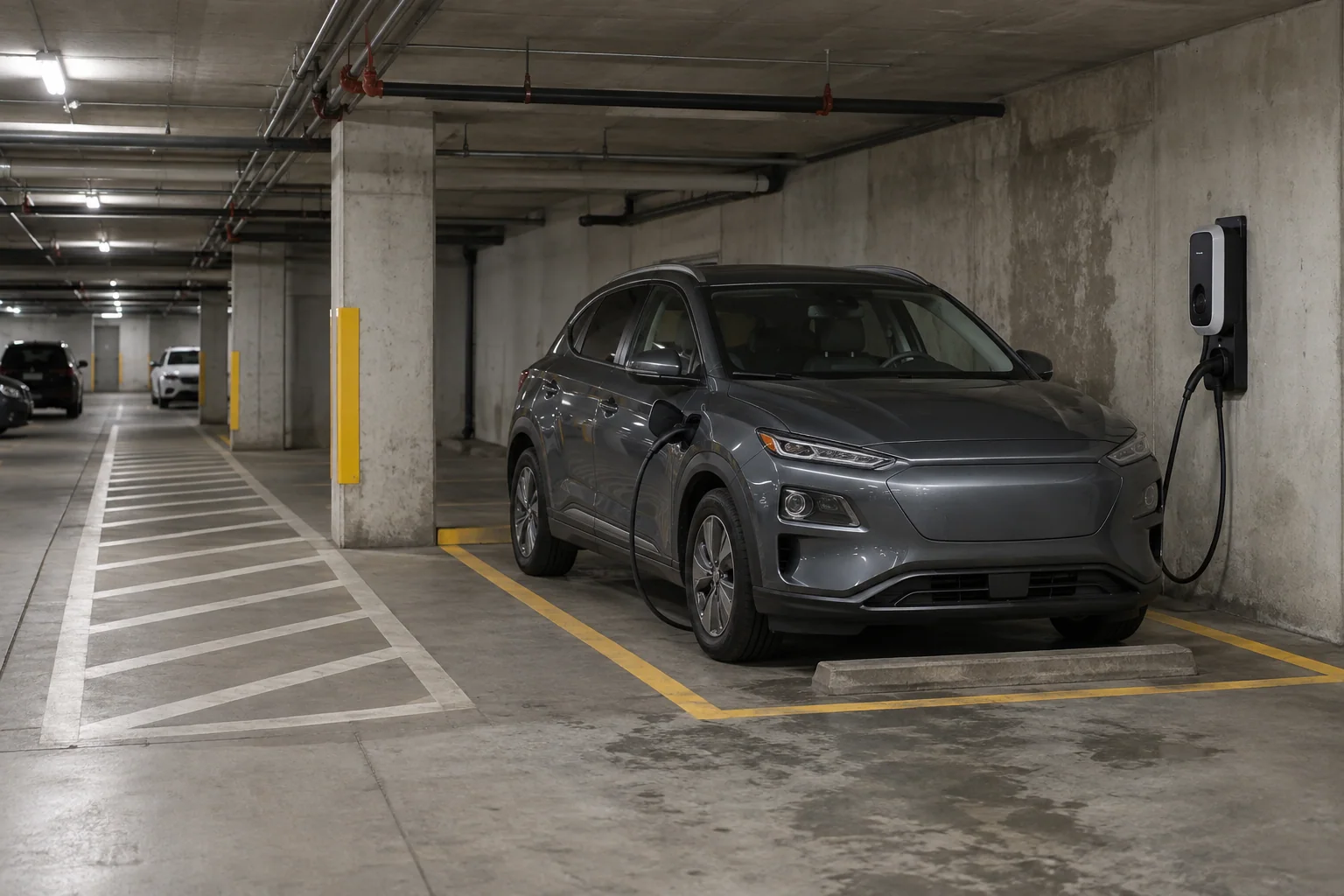
Adding electric-vehicle charging to a parking garage is an electrical and building-management project. Owners should coordinate the charger installation with access, fire protection, maintenance and emergency planning.
Start with the electrical installation
Use charging equipment approved for Canada and suitable for its environment. In Ontario, electrical work generally needs a Licensed Electrical Contractor and the required Electrical Safety Authority process. Ask who is responsible for the notification, review and completion documents. Consult ESA’s charging-system guidance and its contractor guidance.
Assess electrical capacity before choosing charger numbers or power levels. Cable routes and vehicle positions should not obstruct exits, create trip hazards or restrict access to safety equipment.
Review the garage as a whole
- Collect current drawings, sprinkler information and inspection reports.
- Identify charger locations, vehicle barriers, electrical rooms and emergency access.
- Have qualified professionals assess any implications for existing ventilation, alarm and sprinkler arrangements.
- Keep valves, fire department connections, exits and emergency equipment accessible.
Do not infer a mandatory retrofit from a newer international standard alone. Canadian model-code adoption and enforcement are jurisdictional matters. The National Research Council explains how the codes are adopted. The applicable Ontario requirements and your building’s design determine the work needed.
Give staff a clear emergency role
If a vehicle is smoking or burning, keep people away, follow the building’s emergency procedures and call 911 from a safe location. Do not send untrained staff to investigate a battery pack, move a burning vehicle or attempt specialist firefighting. Provide responders with safe access and the information they request.
After an incident, recovery, towing and vehicle storage need coordination with responders and qualified specialists. A vehicle that appears extinguished should not be assumed safe for normal handling.
Maintain the equipment and the plan
Set a reporting process for damaged chargers, cables and connectors. Arrange prompt assessment by the appropriate contractor and prevent use of faulty equipment. Keep installation records, operating instructions and service details together. Revisit the plan when charger numbers, parking layout or building equipment changes.
Questions for a proposed charging project
- Who is designing and approving the electrical work?
- What safety-system review is needed for this specific garage?
- How will damage, faults and emergencies be reported?
- Who holds the completion documents and maintains the equipment?
Contact FC Fire Prevention to discuss the fire protection side of your garage project.