
FC FIRE RESOURCES
How Often Should Fire Extinguishers Be Inspected in Ontario? A Complete Guide
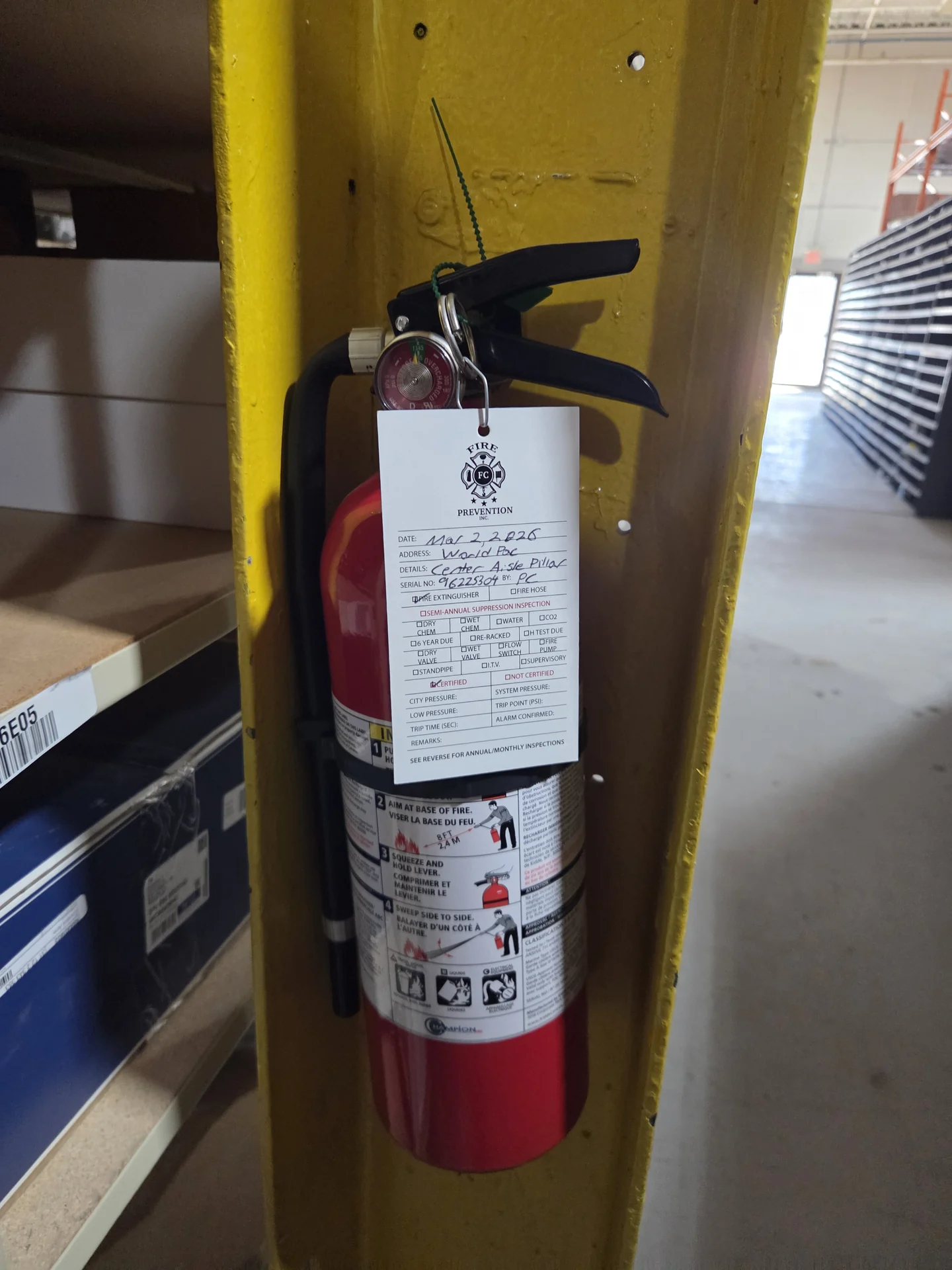
TL;DR: In Ontario, fire extinguisher inspection includes monthly checks and annual professional maintenance, plus internal maintenance and hydrostatic tests at model-specific intervals. This guide explains common service intervals, monthly checks, a downloadable inspection record, and legal references for Toronto/GTA businesses. Confirm the requirements for your exact extinguisher model.
Why fire extinguisher inspections matter in Ontario
Inspection and maintenance help identify damage, missing equipment and service that is due. Ontario Fire Code Section 6.2 sets applicable extinguisher requirements, including monthly inspection and maintenance under the referenced edition of NFPA 10. Keep findings and corrective work together. Insurance terms depend on your policy; ask the insurer about its requirements.
Fire extinguisher inspection Ontario — requirements at a glance
| Inspection type | Who | Frequency | Code / standard |
|---|---|---|---|
| Monthly visual check | Owner / staff | Every month | Ontario Fire Code (Div. B 6.2.7 — monthly check) |
| Annual inspection | Qualified service technician | Every 12 months | Ontario Fire Code + NFPA 10 |
| Hydrostatic pressure test | Qualified service company | Usually 5 or 12 years; confirm the model | NFPA 10 |
| Internal maintenance | Qualified service technician | Every 6 years for applicable rechargeable dry-chemical models | Manufacturer instructions and NFPA 10; separate from pressure testing |
Records: Keep monthly logs and annual tags on site. For fire protection systems installed after Nov 21, 2007, initial verification/test reports must be retained for the life of the system. Make records available to the Chief Fire Official on request.
Need a one‑stop partner? FC Fire Prevention coordinates all inspections (extinguishers, alarms, sprinklers, emergency lighting) and provides audit‑ready reports.
Monthly fire extinguisher check (Ontario) — step by step
Monthly visual checks can be done by trained staff. If anything fails, arrange suitable replacement protection and book a technician.
- Access — unit is visible, labeled, and not blocked.
- Pressure & fullness — check the gauge’s operating range if fitted; check fullness as the manufacturer directs. CO2 models use weighing or hefting. Look for damage or leakage.
- Pin & seal — present and intact; hose/nozzle unobstructed.
- Tag — last annual fire extinguisher inspection date within 12 months.
- Log — initial and date the monthly check.
Annual fire extinguisher inspection (Ontario) — what’s included
- Performed by trained service personnel with the equipment and facilities appropriate to the work.
- Checks pressure/weight, seals, hose, nozzle, body condition, and markings; service/recharge as needed.
- Maintenance tag updated; deficiencies documented with recommendations.
- Signed report kept on site; inspectors may request it during audits.
Bundle your annual extinguisher service with emergency lighting tests and alarm testing (CAN/ULC‑S536) to minimize downtime and site visits.
Hydrostatic testing schedule (NFPA 10)
Internal maintenance and hydrostatic pressure testing are separate services under NFPA 10. The table shows common rechargeable models; confirm the exact model, cylinder and manufacturer instructions with your service technician.
| Extinguisher type | Internal exam | Hydrostatic test | Notes |
|---|---|---|---|
| Rechargeable stored‑pressure dry chemical with a 12-year test interval | Every 6 years | Every 12 years | Empty, examine, service; then re‑charge and re‑seal. |
| CO2, water, wet chemical | As specified | Every 5 years | Pressure vessels require 5‑year hydro tests. |
| Cartridge‑operated units | Model-specific | Model- and cylinder-specific | Do not assume a 5-year interval. Have the service technician check the manual and applicable NFPA 10 table. |
Follow the nameplate and manufacturer manual for your exact model. NFPA 10 tables set minimums; your local AHJ may require more.
Placement & types (quick refresher)
- Classes: A (ordinary combustibles), B (flammable liquids and gases), C (energized electrical equipment), D (combustible metals) and K (cooking oils/fats). Match the extinguisher’s rating and agent to the actual hazard.
- Mounting: Keep in clear view, along exits/paths of travel; follow height/visibility guidance in the Fire Code and manufacturer manual.
- Distribution: Provide the right number/size for the floor area and hazard classification; high‑risk areas (kitchens, shops) may need specialized units.
Unsure what types or how many you need? Book a review with our team: FC Fire — Extinguisher Services.
Common mistakes that lead to fines
- Missing monthly logs (inspector asks; nothing recorded).
- No annual tag or out‑of‑date tags.
- Units left in service with overdue internal maintenance or hydrostatic testing.
- Obstructed or unlabeled locations (behind storage, no signage).
- Using providers without the training, equipment or facilities required for the work.
Penalties: Under Ontario’s FPPA, an individual convicted of an offence under section 28(1) can face a fine up to $50,000 for a first offence or $100,000 for a subsequent offence, imprisonment up to one year, or both. Corporations can face fines up to $500,000 for a first offence ($1,500,000 for subsequent offences). Keep documentation tight and respond promptly to any Notices/Orders.
FAQs — fire extinguisher inspection Ontario
Who can perform the annual fire extinguisher inspection in Ontario?
Use trained service personnel with suitable equipment and facilities. Assign routine monthly checks to a responsible person instructed in the model’s inspection requirements.
Can I recharge an extinguisher instead of replacing it?
Only a suitable rechargeable model can be recharged. A qualified provider must assess its condition, service dates and manufacturer instructions. Nonrechargeable models need replacement after use as directed by their instructions. Arrange replacement protection while a unit is unavailable.
Do I need to keep records and tags?
Yes. Keep monthly logs, annual tags, and service reports on site. Initial system verification/test reports (post‑Nov 21, 2007) must be retained for the life of the system.
What about alarms, sprinklers, and emergency lighting?
Use the applicable Code and equipment-specific schedule for each system. Fire alarm testing, water-based system maintenance and emergency lighting tests involve different tasks. Coordinating visits must not delay a task that is due sooner.
Book service (Toronto & GTA)
For a Toronto or GTA property, have the building address, number and types of extinguishers, available service tags and any damage or missing records ready. Our fire extinguisher service page explains the equipment information to provide. For other systems at the same property, review our inspection and testing services.
Request an extinguisher service quote or call 647-998-3473 to discuss the scope and scheduling.
Sources & references
- Ontario Fire Code (O. Reg. 213/07) — extinguisher ITM (Div. B 6.2.7), alarm testing (CAN/ULC‑S536), records retention.
- NFPA 10 — use the edition referenced by Ontario and the requirements for the actual model.
- CCOHS portable extinguisher guidance — selection, inspection and trained service personnel.
- Amerex hand-portable extinguisher owner’s manual (PDF) — model-specific inspection instructions and a blank record.
- Amerex service overview — common internal-maintenance and hydrostatic-test intervals; U.S. regulatory wording is not Ontario law.
- Fire Protection and Prevention Act (FPPA) — fine ranges for individuals/corporations.
- Toronto Fire Services 2023 Annual Report — local context & trends.
Related FC Fire resources: Inspection & testing services • Emergency lighting • Fire safety plans • More articles