
FC FIRE RESOURCES
Fire Extinguisher Inspection Checklist for Ontario
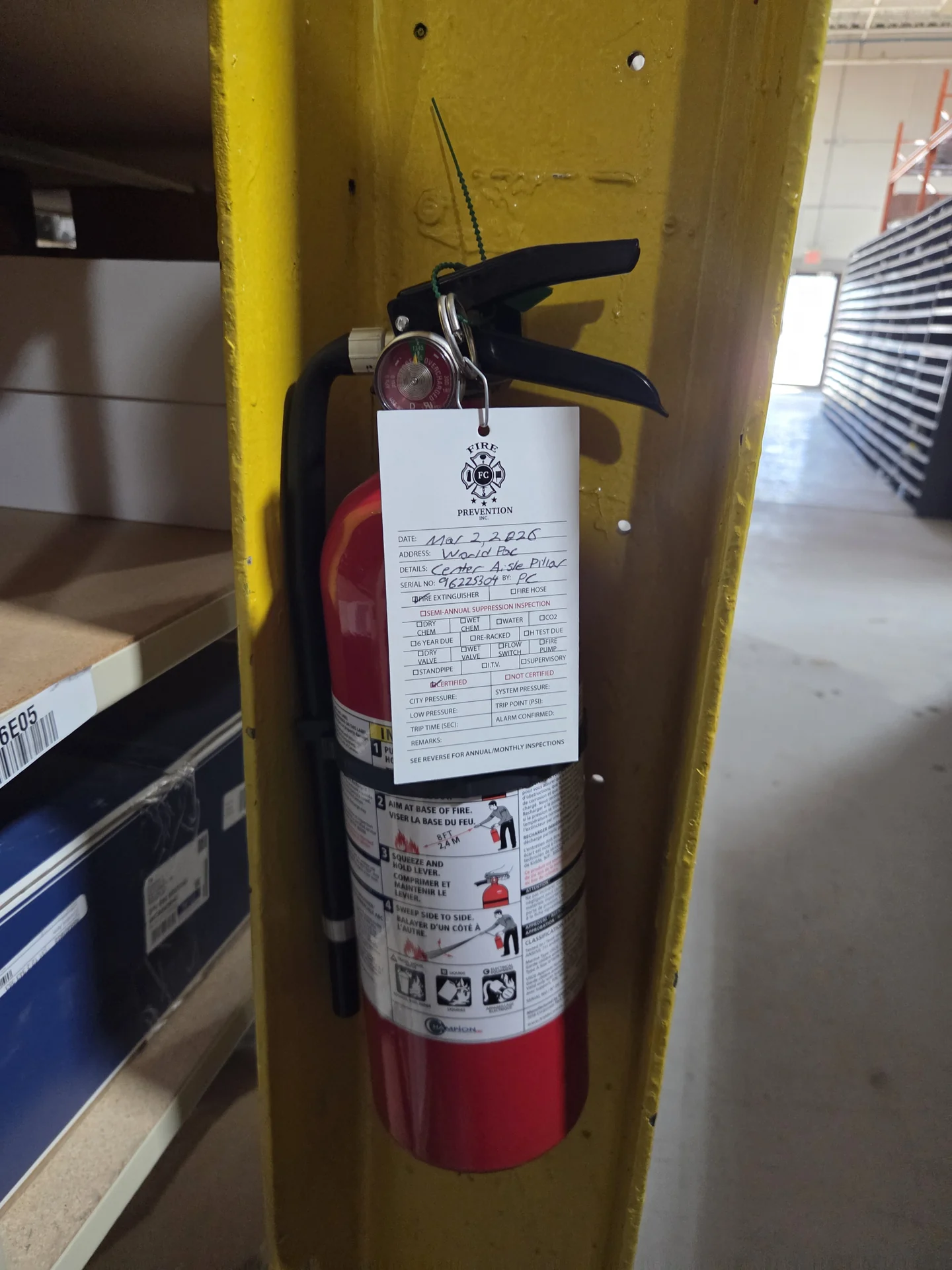
Portable fire extinguishers need regular attention between service visits. For Ontario workplaces and common areas, distinguish the routine visual inspection from annual maintenance and the additional work due for the particular extinguisher type. A pressure gauge in the green zone is only one part of the check.
Monthly visual inspection checklist
Assign a responsible person and a backup to inspect extinguishers at least monthly, and more frequently where conditions warrant. Use your property’s inventory and manufacturer instructions so no unit is missed.
- Location: the extinguisher is present in its designated place.
- Access: the unit is visible or its location is clearly identified, and it can be reached without moving storage.
- Instructions: the operating label is legible and faces outward.
- Pin and seal: the safety pin and tamper seal are intact, with no signs of discharge or interference.
- Charge: where a gauge or indicator is fitted, it is in the proper range. Not every extinguisher has a gauge; use the appropriate check for its type.
- Condition: look for corrosion, dents, leaks, damaged handles, blocked nozzles or damaged hoses and mounting hardware.
- Record: identify the unit, date, inspector, findings and follow-up action in the maintenance record.
If a unit is missing, discharged, damaged or questionable, arrange service and maintain the required protection while it is unavailable. Do not pull the pin, test-discharge, open or recharge an extinguisher as part of a routine visual check.
Annual maintenance
A qualified service provider examines and maintains the equipment, checks relevant service dates and documents the results. The work should confirm suitability and condition, identify repairs or replacement needs, and provide a clear record for the property manager. A new tag does not resolve an outstanding defect.
Tell the provider about changes to the hazards, room use or layout. Selection, rating, mounting and travel distance depend on the hazards and applicable requirements; choosing a familiar ABC model is not a substitute for reviewing those conditions.
Internal maintenance and hydrostatic testing
Additional service intervals depend on the extinguisher’s construction, extinguishing agent and applicable requirements. Many rechargeable stored-pressure dry chemical units have six-year internal maintenance and twelve-year hydrostatic test intervals, while other types follow different schedules. These intervals should not be applied to every extinguisher.
Have the technician identify the correct schedule from the equipment markings, manufacturer instructions and the standard referenced by the Ontario Fire Code. Non-rechargeable units must not be refilled. A unit that has been used needs prompt assessment even if pressure remains.
Keep a complete service history
Retain inspection records, annual service documentation and evidence that deficiencies were corrected. Keep each extinguisher identifiable by its location or asset number, and update the inventory when equipment moves or is replaced.
References: Ontario Fire Code and Canadian Centre for Occupational Health and Safety: fire extinguishers. Contact FC Fire Prevention to arrange an extinguisher service program for your property.